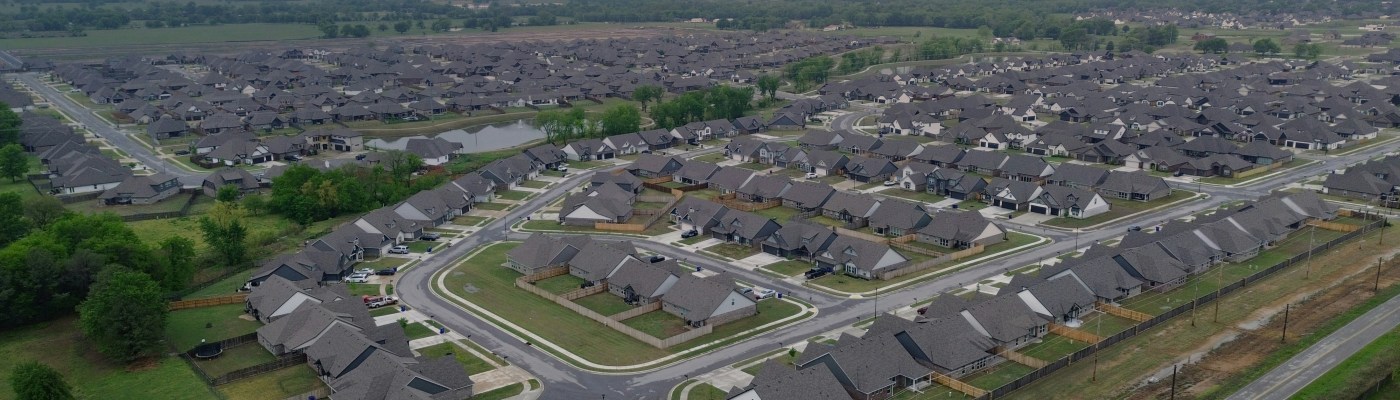
The United States has a housing supply gap estimated between 3.8 and 4.5 million units. People are struggling to afford homes, and those who are renting are spending a higher percentage of their income on housing than in previous eras. The percentage of buyers who are purchasing their first home is at an all-time low of 24 percent, while the average age of first-time home buyers has reached an all-time high of 38, according to the National Association of Realtors. Almost half of all renters are considered cost-burdened, having spent at least 30 percent of their income on housing in 2023, according to the U.S. Census Bureau. In short, the U.S. has an increasingly severe housing supply problem. This problem likely has many causes, but near the top of the list is a web of overly burdensome local zoning rules. Targeted litigation and statewide deregulation are two promising strategies for rolling back restrictive zoning and opening up the market for much-needed housing development.
The first large-scale municipal zoning code was implemented in Los Angeles in 1908, according to the Cato Institute. At the time, it was unclear whether these sorts of zoning regulations were constitutional, as many believed them to violate the Fifth Amendment’s Takings Clause and the Fourteenth Amendment’s Due Process Clause. However, the Supreme Court gave the green light to municipal zoning regulations in the 1926 case Village of Euclid v. Ambler Realty Co., and zoning quickly spread nationwide, as detailed by the Institute for Justice. As of 2019, 75 percent of all residential land was zoned only for single-family housing, according to New York Times research. In California, where the housing crisis is particularly dire, 95.8 percent of all residential land is zoned solely for single-family use, researchers at UC Berkeley found. As a result, on 75 percent of residential land nationwide—and 95 percent in California—it is illegal to build townhomes, duplexes, or apartment buildings. Further, as explained by Jenny Schuetz in a Brookings Institution article, “Even where multifamily buildings are allowed, zoning rules like building height caps and minimum lot sizes often limit the financial feasibility of developing new housing.”
The results of increasing restrictions on housing development over the last century are predictable: less housing and higher prices. There is a shortage estimated between 3.8 and 4.5 million units nationwide, and both renters and home buyers spend a larger percentage of their income on housing. Additionally, because states with restrictive zoning tend to have higher housing costs, more federal aid goes to these states, according to the Cato Institute. When states receive higher levels of federal aid to offset inflated housing costs, they face less pressure to enact serious reforms—further entrenching the problem. While many factors contribute to rising homelessness, a mismatch between demand and available housing supply is almost certain to produce some level of unavoidable housing insecurity.
Localized democracy is often touted as a solution to many policy problems, but in the case of zoning, it has largely failed to produce meaningful change. As Atlantic writer Jerusalem Demsas points out, local decision-making processes tend to be dominated by a vocal minority, making it difficult to enact reform. Political action is often more feasible at the state level. Individuals with more time and resources—commonly known as NIMBYs (“Not In My Backyard”)—tend to dominate local meetings and public comment periods. Because the media pays less attention to hyperlocal debates, and state-level elections involve more party competition and broader accountability, policy action is generally more likely at the state level.
Two predominant solutions to overly restrictive zoning codes are targeted litigation and statewide preemption or deregulation.
The Institute for Justice is at the forefront of litigation challenging restrictive zoning practices. IJ’s Zoning Justice Project challenges laws that restrict housing and small businesses across the country on constitutional grounds, such as the Fifth Amendment’s protection against the uncompensated taking of property. IJ has even argued for overturning Euclid, aiming to restore not just the right to own property, but the right to use it.
Another approach, advocated by Demsas and supported by a Discourse editorial, is to shift at least some decision-making power from municipalities to state legislatures. Statewide zoning reform is not only more feasible politically—it also results in more balanced policymaking. With a broader geographic perspective, statewide reforms are better able to weigh the regional need for housing against local concerns such as traffic or construction noise.
The U.S. housing crisis is not a failure of the free market—it’s a failure of overregulation. Local zoning laws that restrict lot sizes, building heights, and land use suppress supply, creating artificial scarcity and driving up the cost of living. To address this problem, we need a two-pronged strategy: strategic litigation that reaffirms property rights, and state-level reforms that reduce regulatory barriers. Both are essential to restoring the freedom to build.
 The Name of Liberty